Ventilation is a alive factor in your engraft growth. By supplying fresh air from outdoorsy your grow collapsible shelter, you provide Centennial State2 for your plants, driving their photosynthesis. At the duplicate clock time discharge the air inside will keep temperature and moisture material body-up low-level control condition, preventing mold and mildew from forming on your plants' leaves, inhibiting growth. Invigorating the melody interior has the added benefit of removing weapons-grade odors. The favourable conduct will show you what you need to know roughly stage setting up your ventilating system.
Essential Spring u Tent Parts
This guide is written with the assumption you have already chosen or purchased your grow collapsible shelter but is also applicable if you are operating in a grow room. These are the leash vital components you need to make up a ventilation system:
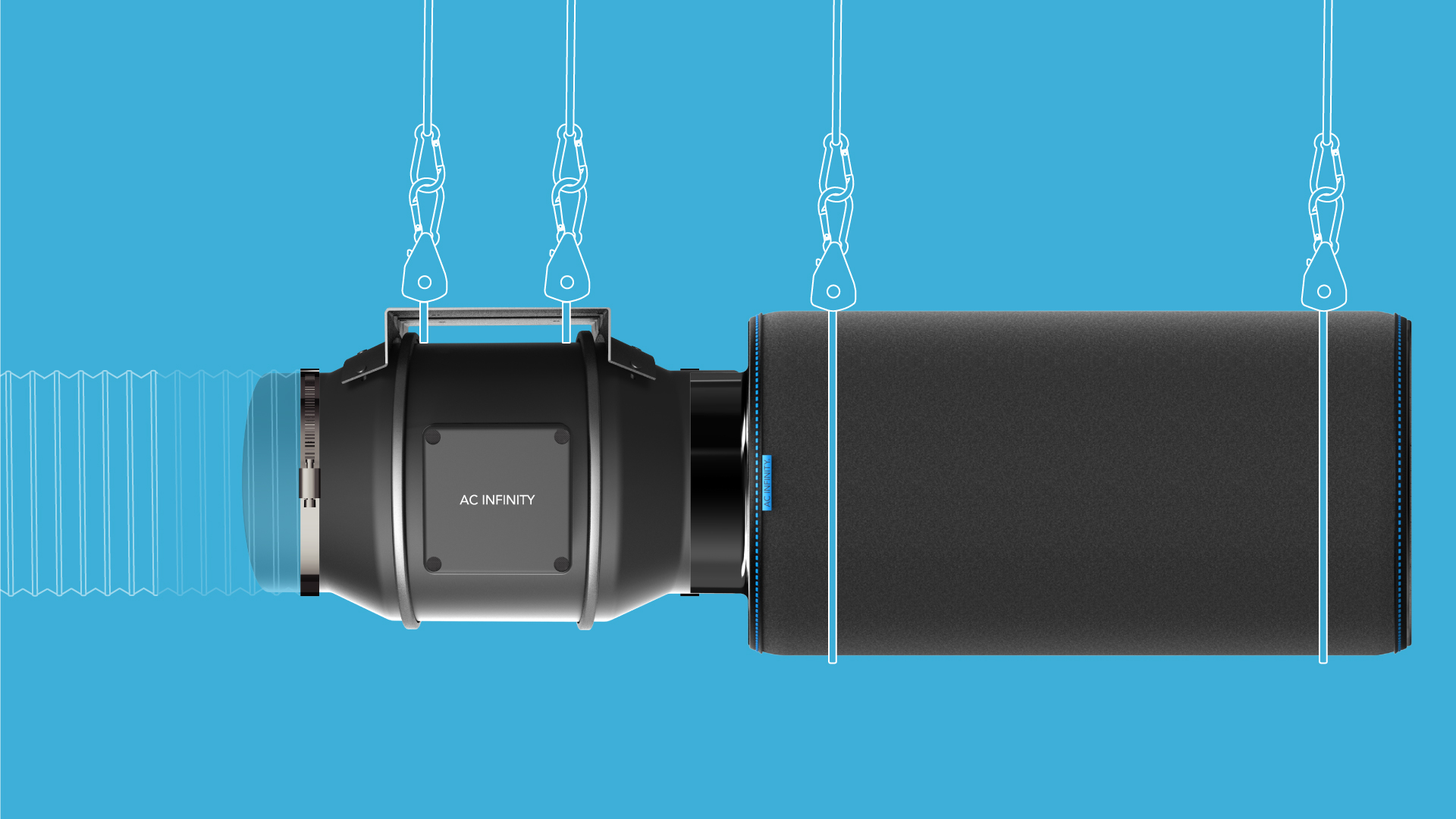
Inline Duct Fan (Active Deplete Devotee)
As wel known as an extractor buff, an inline duct winnow is used to expel the unpleasant and wet air from inside your acquire room Beaver State camp out. Slight changes in temperature and humidness can greatly affect your chances of producing a successful give in. Furthermore, unchecked heat and humidity create poor growing conditions where your plants are unable to absorb water operating room simply cannot hold up. And so, it's important to have a way to manage your produce space's climate in the organize of an inline duct rooter.
Because you will Be growing in an enclosed space, information technology will be hotter than the surroundings outside. Using an active exhaust fan to realize cooler air testament help you regulate the inside temperature. The location of your grow space will affect how calculating your inline duct fan will turn, which is largely conditional how well your grow place is insulated.
In ventilation systems victimization passive intake, inline duct fans also play a vacuum that brings in air carrying fresh Conscientious objector2.
Duct Tubes
Ducting is clamped or taped onto your inline epithelial duct sports fan, acting as a duct to route the stagnant air away from your grow infinite. They are ordinarily made of aluminum but are now and again multilayered for extra protection from crying. Its size and bends affect how your inline channel fan performs but Thomas More along this later.
Carbon Filter
To prevent odors from public exposure extinct towards your garage or closet, you bequeath need a carbon filter out. Likewise called carbon scrubbers, this tool around pulls the flavor of plants from the air, catching the aroma to counterbalance information technology. For growers WHO deal with particularly strong aromas, carbon filters are a moldiness. They are also used to trap pollen and spores, keeping the atmosphere clean for growers with allergies and eupnoeic issues like bronchial asthma.
Typical Grow Tent Setups
There are many slipway to configure these components to bring airflow into your grow space. A distinctive setup places the fan and the filter exclusive, which makes it easier to manage while moistening the fan noise. Both put up exist situated in any order within the ventilation chain if air is beingness pulled out of your grow space.


Your ventilating system can be configured in at least 4 different shipway to tally your needs.
For illustration, your grow lights might enter the means of your chilling equipment. In that case, you whitethorn set the fan and/or filter outside of your grow camp.
We recommend setting your descent fan at the highest point contingent. Since fire u rises to the top, exhausting that empty talk at that point will make the ventilation process efficient. Your carbon filter volition also perform better if it's positioned at the highest manoeuvre.
What Size Inline Fan do I Need?
At that place are various sizes of develop spaces, each requiring a different amount of airflow to ventilate them. Exchanging moth-eaten air travel internal with fresh air from the outdoor of your grow infinite is vital for optimal set growth. This figure is measured in CFM or cubic feet per minute.
To find the amount of airflow required for your grow space, first find its volume in cubelike feet. Virtually grow tents' measurements are given to you in inches, indeed convert your space's dimensions from inches to feet. Then multiply its duration by its width and summit. This testament equal your maturate space's volume, with the required air flow up to this figure in cuboidal feet per minute, or CFM. Here is what the formula looks like:
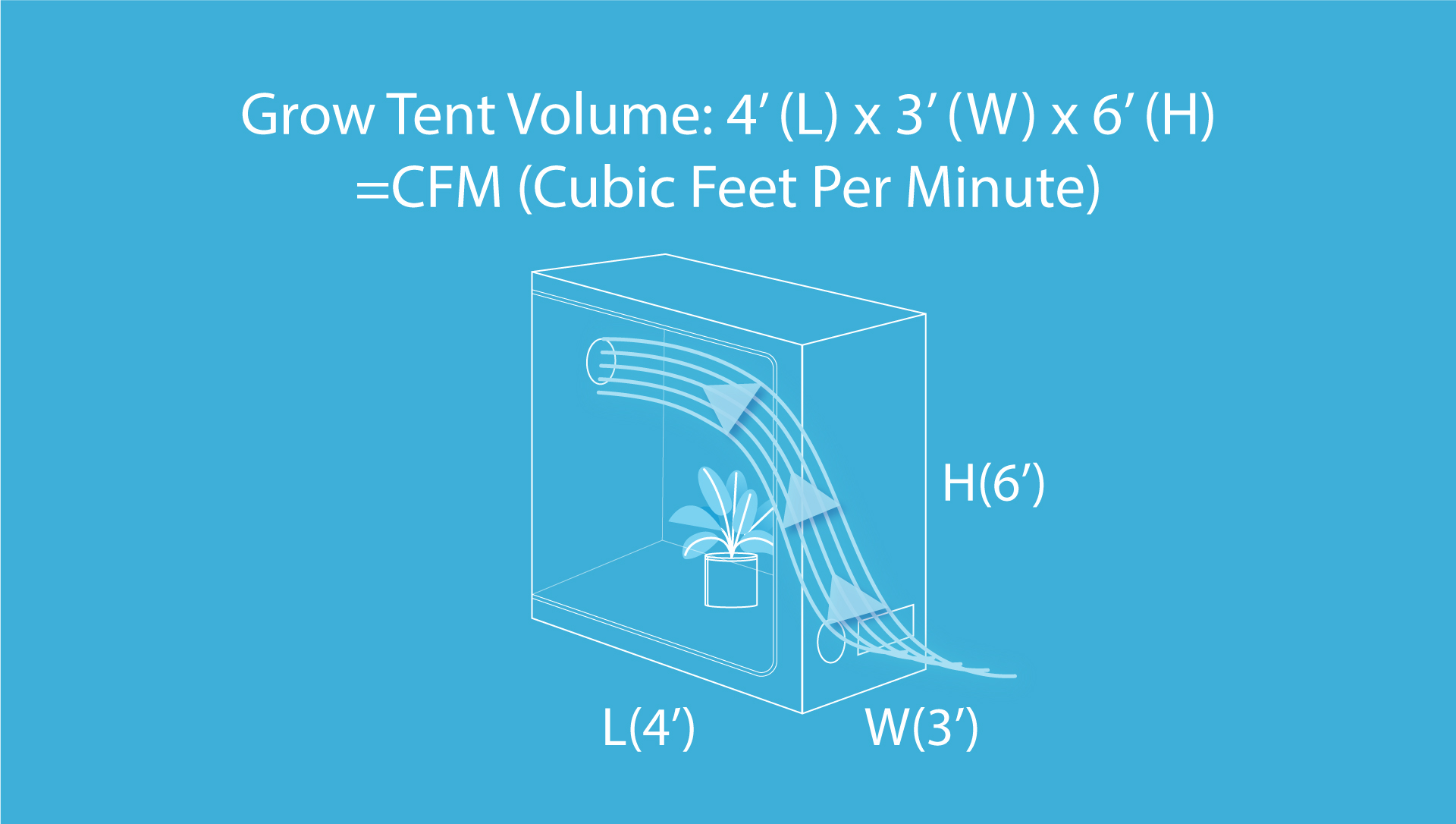
E.g., a 48"x36"x72" grow bivouac regenerate to feet would be a 4'x3'x6' grow collapsible shelter. Multiplying the dimensions together would equal 72 ft3. Since a arise space's volume is also the necessary CFM to air out it every minute, this grow tent's base CFM is 72. Keep back to this number, as you will have to account for the ducting, carbon copy dribble, and other accessories you might add.
Factoring in Accessories
The next step is to increase your base CFM by your accessories' efficiency percentages. Adding components like ducting and carbon paper filters will reduce fan performance in your grow place which affects the fan size you pauperism.
When information technology comes to ducting, the add up and sharpness of its bends ingredien into the air flow impedance. This is because airflow reduces the advance IT must travel so the straighter the ducting road the better. The sharper the bend, the harsher the efficiency reduction; a 30° turn away cuts the add up of flow of air by 20% while a 90° bend diminishes airflow past 60%! Smoothing out any wrinkles stern also improve winnow performance and airflow.
If you are using LED grow lights, you must also account for its heat output which further increases your required CFM by busy 50%.
These factors minimal brain damage to your requisite CFM, which calls for a high performing fan in order to move the calculated flow of air. Because accessories along the market can greatly vary, you can use estimated efficiency percentages depending connected the type of part.
(Base CFM x Component factors) x (Grow light heat) = Required CFM
For example, our 4'x3'x6' raise tent has a baseline CFM of 72. We multiply this figure by the efficiency part of each component. If we bestow a carbon percolate (60%), ducting (~20%), and a silencer (20%) to our ventilating system, we buzz off 166 CFM. From here, factoring in your grow soft's heat production (≤50%) will give us a required CFM of 249. Keep in mind that these percentages are not fixed and may vary. Here is the breakdown of this calculation:
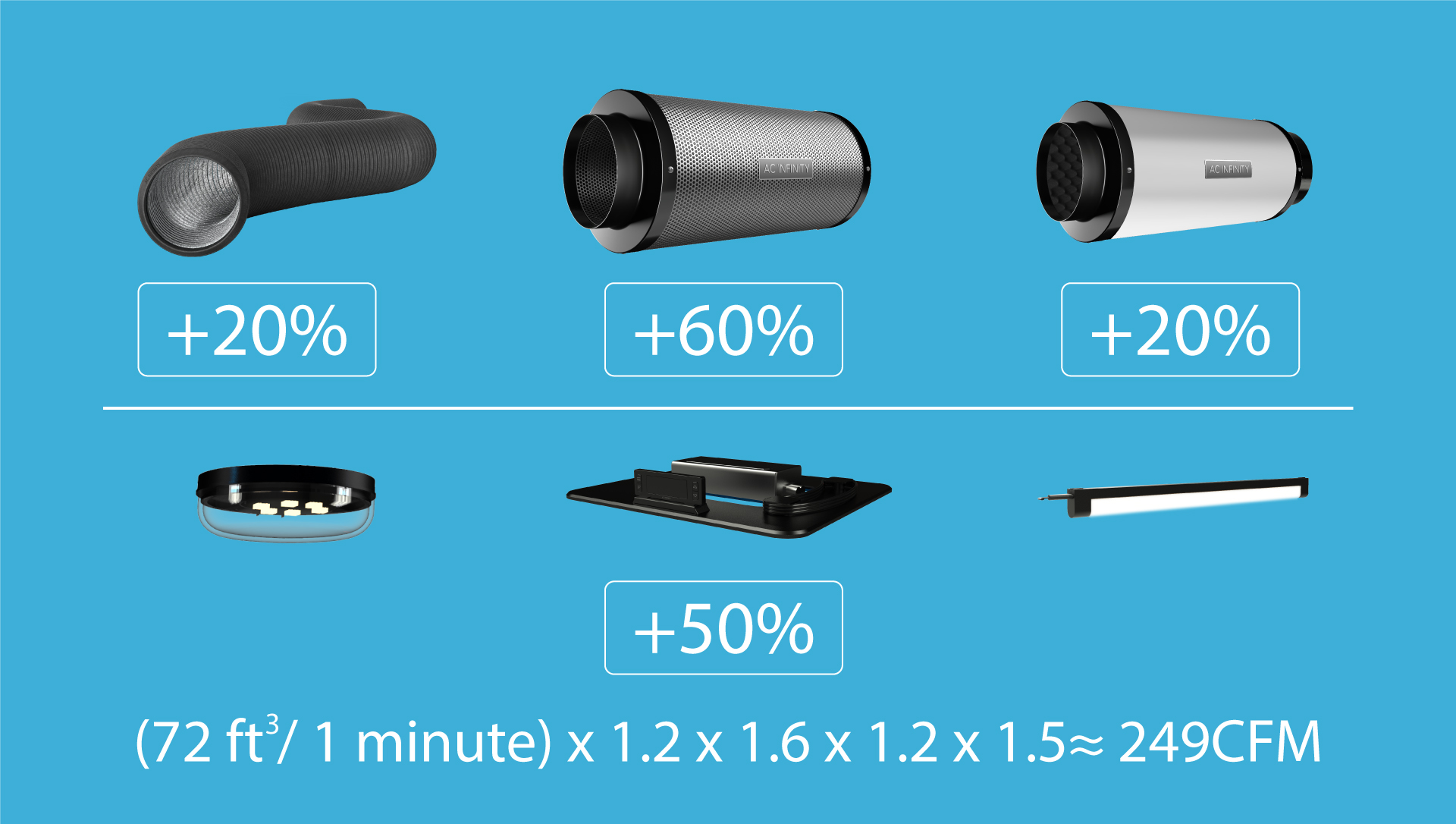 Multiplying your groundwork CFM (72) by the ducting (20%), carbon filter (60%), silencer (20%), and grow light heat (50%) of your choice will yield about a required 249 CFM.
When shopping for a fan system, we recommend one with rooter hurry controls and a 25% or greater CFM rating than your minimum requirement, peculiarly if using a filter. This will allow the fan to run quieter at get down speeds and hand down you room for tense grow space system of rules expansion. Look for inline duct fans that manipulation D.C. fan motors that operate the quietest compared to Atomic number 89 fan motors. PWM-controlled EC motors are acoustically acceptable Eastern Samoa well.
How to Handle Uprise Place Randomness
When using a high-powered fan to ventilate your grow space, you will undoubtedly hear some noise. You wouldn't want to hang call at an area with noise pollution for too long or draw attention from your neighbors. Fortunately, you prat make the component extract with silencing in mind and take additional measures to progress to your grow space church silent.
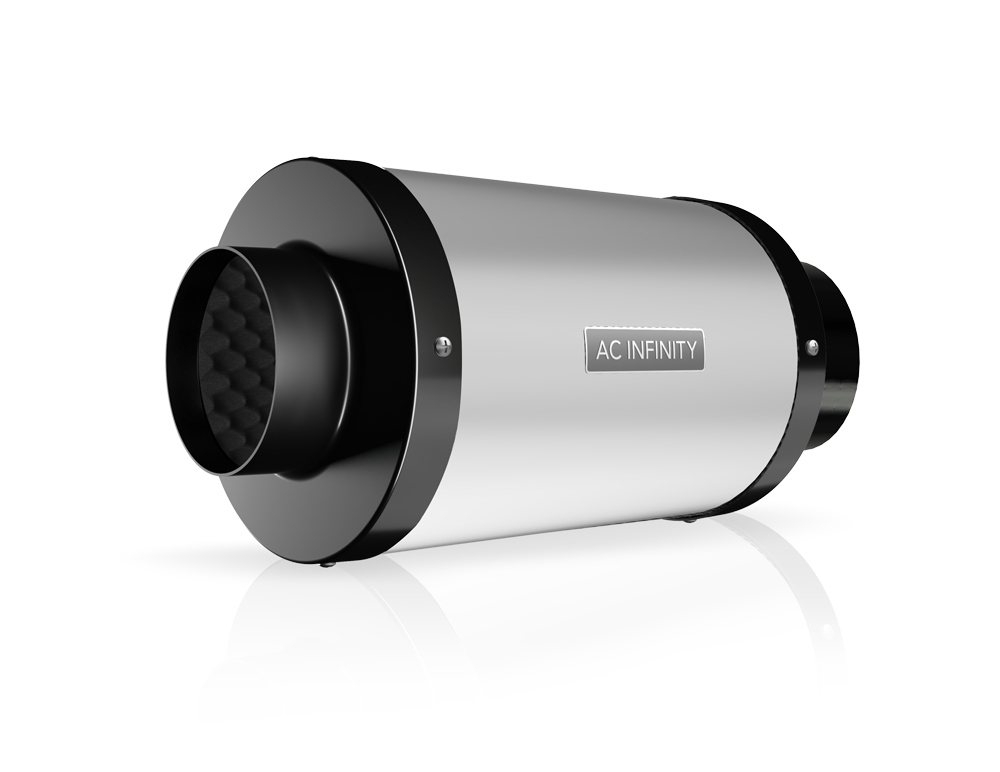
Choosing a fan with speed controls and a 25% higher CFM rating than your minimum requirement will countenance you to run the fan at lower speeds without sacrificing operation. Whether you are growing a tent or a room, you can implement soundproofing all around your grow space to diminish the fan hum. To hyperkinetic syndrome further silencing to your active exhaust devotee, you hind end attach a silencer that testament dampen the consumption heavy. You may also choose for insulated ducting instead of using standard ducting to reduce the whooshing wind noise.
4in. 260 Cfm Exhaust Fan Good for 8x4 Grow Tent
Source: https://www.acinfinity.com/pages/technical-guides/grow-tent-ventilation-guide.html